

The City of Lowden is committed to keeping residents safe through professional police, fire, and emergency medical services. This page provides quick access to resources, safety tips, volunteer opportunities, and emergency notifications.
Emergency? Dial 911 immediately.
For police, fire, or medical emergencies, always call 911 first.
(Non-emergency numbers are listed below.)
EMS Services
Providing emergency medical care and on-scene assistance to residents in need.
Non-emergency: (563) 941-7372
Learn More
Non-emergency: (563) 941-7372
Learn More
Fire Department
Responding to fires, rescues, and community safety programs.
Non-emergency: (563) 941-5887
Learn More
Non-emergency: (563) 941-5887
Learn More
Police Department
Protecting the community, enforcing laws, and responding to emergencies.
Non-emergency: (563) 886-2121
Learn More
Non-emergency: (563) 886-2121
Learn More
Listen to Our Emergency Sirens
Familiarize yourself with the sounds of the city’s emergency alarms. Below are recordings of the fire, storm, and attack sirens so you’ll know what each one means. Knowing the difference can help you respond quickly and safely during an actual emergency.
- Fire Siren: Signals a local fire response. If you hear this outside a test, stay clear of emergency response routes and avoid the affected area.
- Storm Siren: Warns of severe weather such as a tornado that requires immediate shelter. If you hear this outside a test, move to an interior room or designated storm shelter and monitor official weather updates.
- Attack Siren: Indicates a serious civil emergency. If you hear this outside a test, move indoors immediately, go to an interior room or shelter, stay away from windows, and follow official alerts until authorities give an all-clear.
Stay informed during emergencies with Alert Iowa. Receive text messages with severe weather warnings, road closures, and critical community updates.
Opt-In
Text CedarIA to 672-83 to subscribe
Join Your Local Emergency Services Team
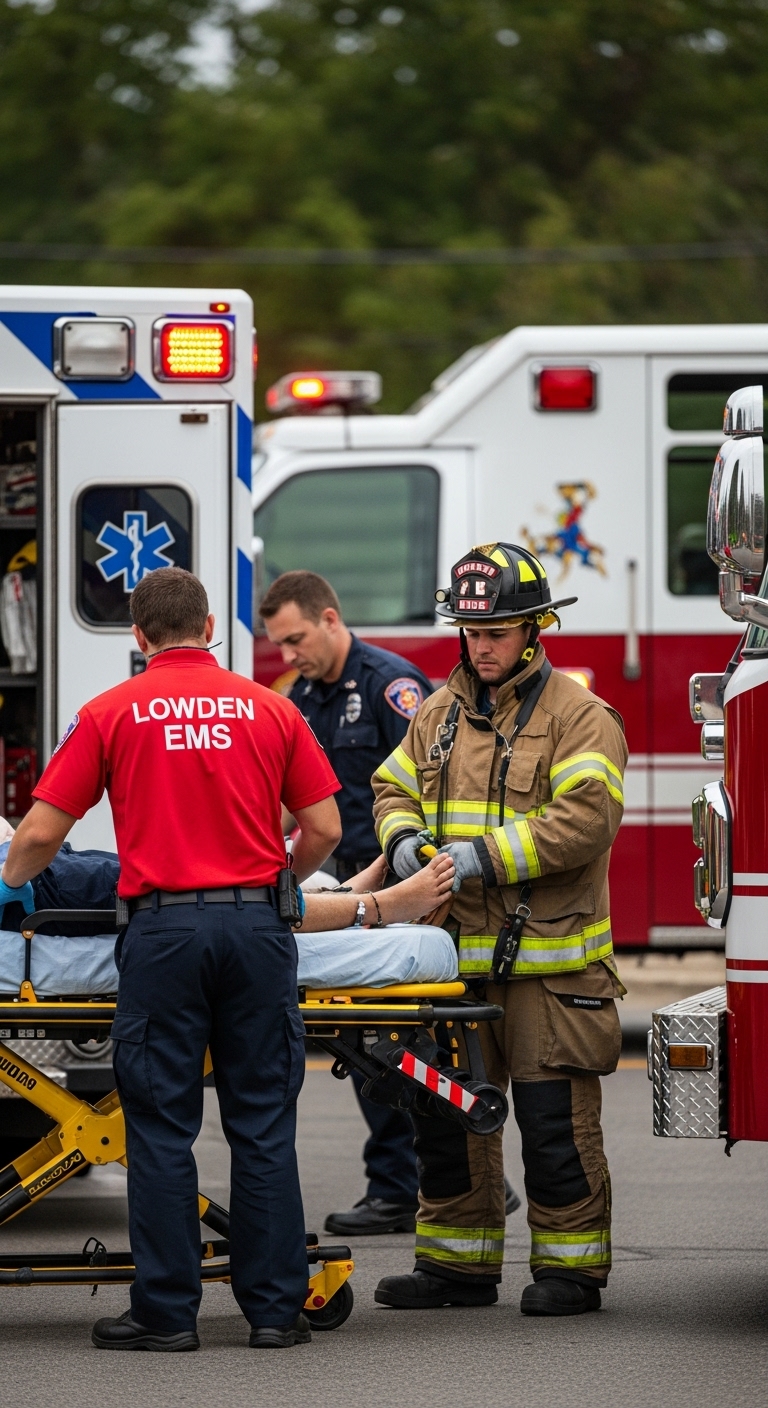
Make a difference in your community by volunteering with the City of Lowden’s fire and EMS teams.
- Volunteers play a vital role in keeping our city safe. From responding to emergencies to supporting community safety programs, your time and skills can save lives and strengthen our community. Monthly meetings are held the last Monday of each month.
- Protect lives and property
- Make a difference
- Build teamwork skills
- Provide critical care
- Learn medical skills
- Develop crisis management skills
Safety Tips / Preparedness
Stay ready for the unexpected. Use these resources to prepare your household for fires, severe weather, medical emergencies, and other situations where quick action can make all the difference.
Protect your household by taking proactive fire safety measures:
- Install smoke alarms on every level of your home and inside all bedrooms. Test monthly.
- Create a family evacuation plan with two exits per room and a safe outdoor meeting place. Practice your plan.
- Keep fire extinguishers in key areas (kitchen, garage, workshop) and learn the PASS method (Pull, Aim, Squeeze, Sweep).
- Give space heaters and candles three feet of clearance, and never leave them unattended.
- Make sure your house number is clearly visible from the street for responders.
Be ready before storms hit by making a plan and building an emergency kit:
- Stock three days of water (1 gallon per person per day) and non-perishable food.
- Keep a flashlight, batteries, radio, first aid kit, and medications on hand.
- Identify safe shelter areas like basements or interior rooms with no windows.
- Prepare go-bags with critical documents and know your evacuation routes.
- Keep vehicles fueled and have a backup power source for essentials.
Quick action saves lives. Learn basic medical response and be prepared:
- Take CPR and AED training to respond in cardiac emergencies.
- Stock a well-supplied first aid kit with bandages, antiseptic, gloves, and pain relievers.
- Learn signs of a stroke (FAST: Face drooping, Arm weakness, Speech difficulty, Time to call 911).
- Post Poison Control’s number — 1-800-222-1222 — in a visible location.
- Recognize heatstroke, hypothermia, and allergic reaction symptoms, and know immediate treatment steps.
Planning ahead strengthens your family’s resilience in emergencies:
- Create a family communication plan with emergency contacts and meeting points.
- Store digital copies of IDs, insurance policies, and medical information.
- Check in on elderly neighbors or those with special needs during emergencies.
- Prepare pet carriers, food, and water for animals.
- Teach everyone in the home how to safely shut off gas, water, and electricity.